DAMAC Islands Phase 2: Does an 8% Yield Hold Up in Dubailand?
Executive Summary
At $612,662 entry for a four-bedroom townhouse with a 75/25 payment plan and a Q4 2029 handover, DAMAC Islands Phase 2 offers credible early-stage exposure to Dubailand's maturing family rental market. The 8% projected ROI is ambitious but not implausible for the unit type and location, provided the amenity stack actually delivers at handover. This is a patient capital play with a genuine downside: three and a half years of construction risk with a developer whose track record on delivery timelines is mixed.
The Numbers
The 75/25 structure means 75% of the purchase price is due before handover, with the remaining 25% on completion in Q4 2029. On a $612,662 townhouse, that is roughly $459,497 deployed during construction and $153,166 due at keys. The payments are staged across the build period, which smooths capital outlay but keeps the investor exposed to the full construction window.
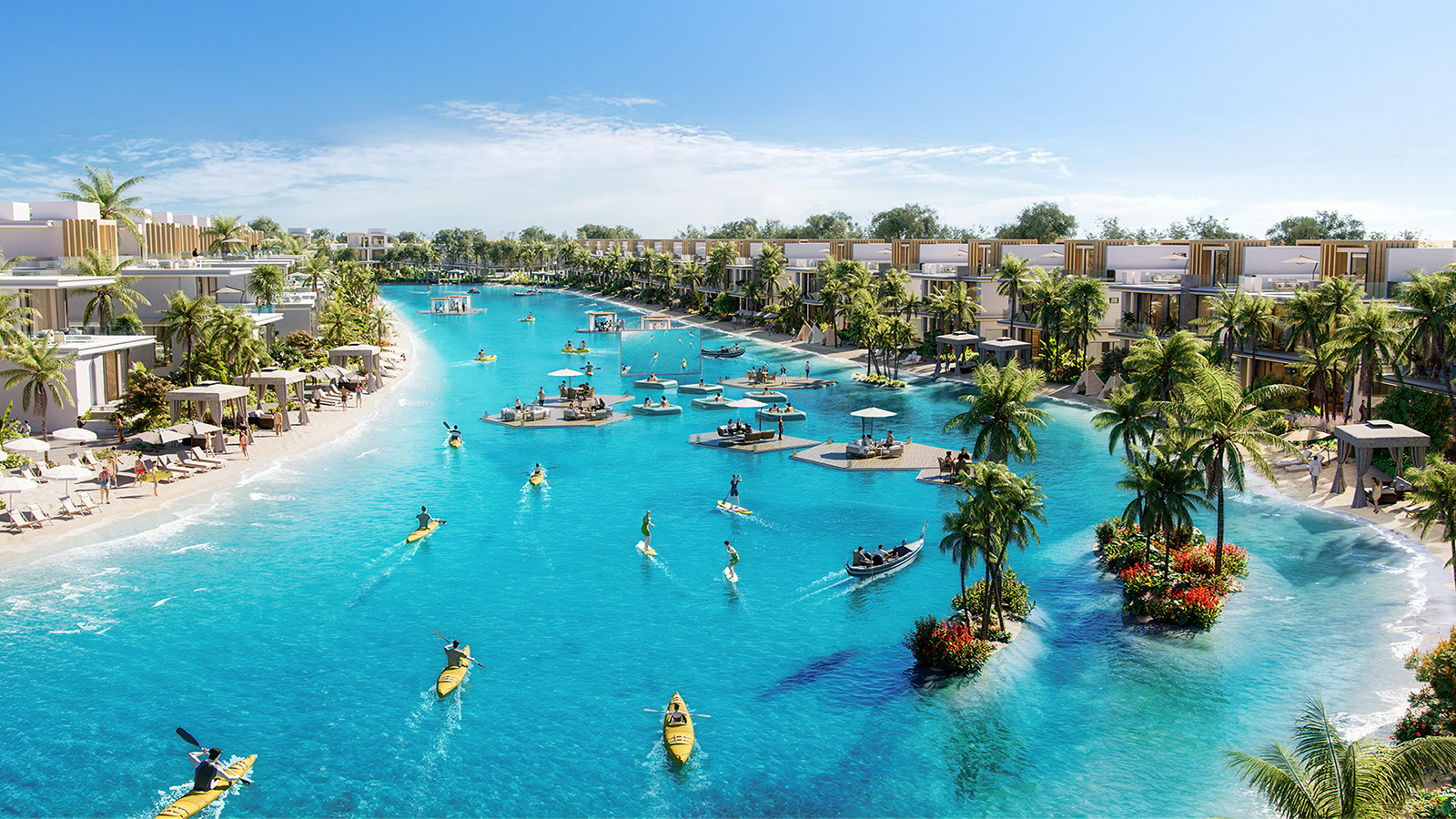
The 8% ROI figure deserves scrutiny. At $612,662, an 8% gross yield implies annual rent of approximately $49,000. For a 205 sqm four-bedroom townhouse in a community with on-site lagoons, a jungle river, and an Aqua Dome, that figure is plausible in the family rental market, particularly given proximity to Global Village and IMG Worlds of Adventure, both of which draw consistent tenant demand from families who want suburban living near entertainment infrastructure. It is not guaranteed. Net yield, after service charges and management fees, will land meaningfully lower. Investors should model 6 to 6.5% net and treat any upside as a bonus.
The price per square metre on a 205 sqm townhouse at AED 2.25 million works out to roughly AED 10,976 per sqm. For a Dubailand community with this amenity depth, that is competitive entry pricing versus comparable waterfront-themed villa communities in Dubai. Later phases will cost more. That is the core early-investor argument.
What Makes It Interesting
Two things stand out, and neither is the tropical theme.
The first is unit sizing at this price point. A four-bedroom townhouse at $612,662 in a community with lagoon infrastructure is genuinely hard to replicate in Dubai's inner suburbs. Investors targeting the family rental segment, which tends toward lower vacancy and longer tenancies than the short-stay market, get significant floor area at a price that still leaves room for capital appreciation if Dubailand continues its trajectory.
The second is the amenity differentiation. A Hot Spring Spa, Aqua Dome, and jungle river are not standard suburban community features. They create a lifestyle narrative that supports premium rental positioning. The risk is that these amenities are promises at this stage, not operational infrastructure. But if DAMAC delivers them at the quality implied, the community will rent above comparable product in the area.
What to Watch
Three specific risks deserve attention.
Construction timeline. Q4 2029 is three and a half years from today. DAMAC has a large development pipeline and an uneven handover history across its projects. Investors should pressure-test their exit or rental strategy against a six-to-twelve month delay scenario. It is not unlikely.
Amenity delivery at specification. The marketing centres on the tropical amenity stack. If the jungle river becomes a landscaped canal and the Aqua Dome is a glorified splash pad, the rental premium justification softens. There is no contractual mechanism in typical off-plan sales to enforce amenity quality.
Dubailand infrastructure lag. The area has matured, but it is not Dubai Hills or Arabian Ranches. Retail, dining, and transport options within walking distance remain limited compared to more established communities. Family tenants will tolerate a car-dependent lifestyle for the right community, but the rental pool is narrower.
Bottom Line
DAMAC Islands Phase 2 is for the investor who wants four-bedroom family product at early-stage pricing, accepts a long construction horizon, and understands that an 8% gross yield requires the amenity promise to materialise. Model net yield conservatively. The entry price is the real argument here, not the ROI headline.
Pass if you want near-term income, a shorter construction risk window, or a developer with a tighter delivery track record. For that profile, The Valley by Emaar at a lower entry price and a Q3 2026 handover is the cleaner option on this platform.
Data sourced from OffPlan. ROI projections are developer-estimated and not guaranteed. This is not financial advice.