Dubailand Deep Dive: Why Yields Hit 8% in Dubai's Entertainment District

Executive Summary
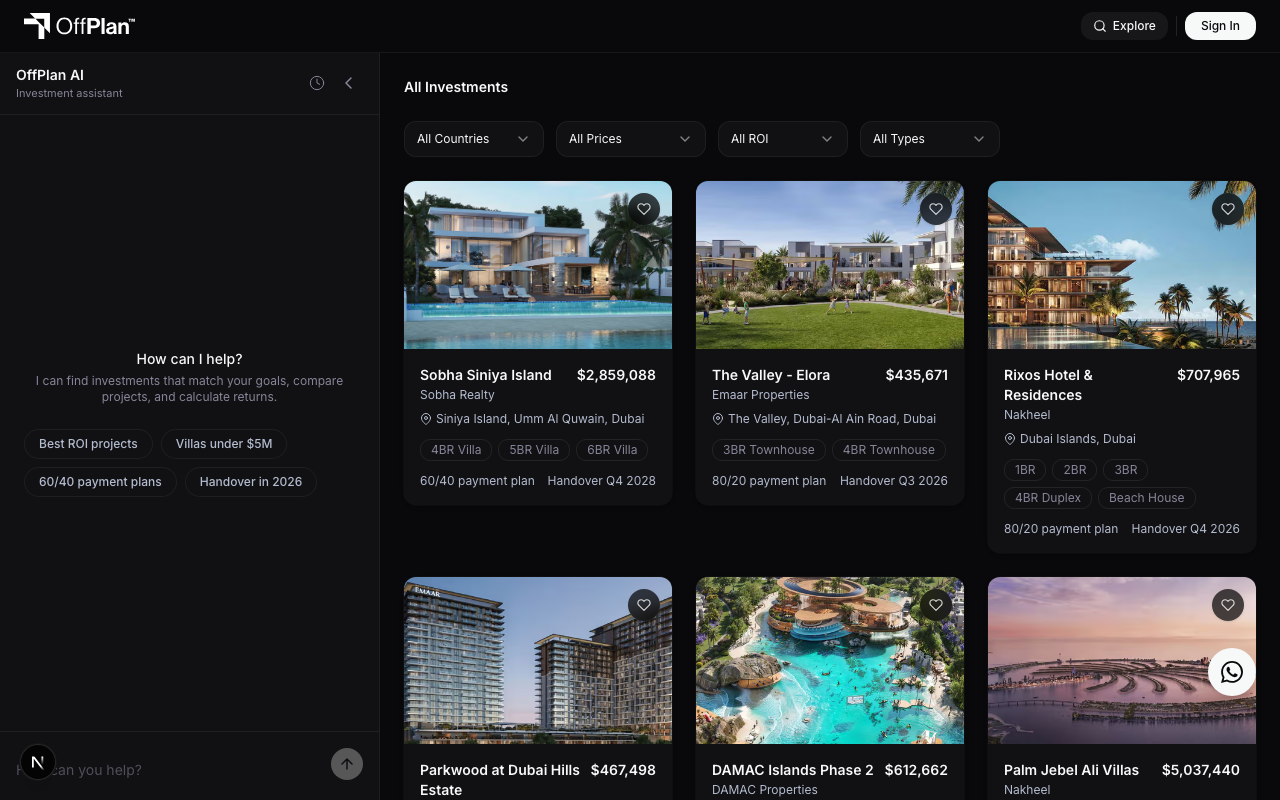
DAMAC Islands Phase 2 in Dubailand carries a stated estimated ROI of 8%, starting at $612,662 for a 4-bedroom townhouse with handover in Q4 2029. That headline yield is achievable, but it requires a tenant profile that has not yet fully materialised, an amenity stack that will not be operational until handover, and a three-and-a-half-year construction window in which your capital is partially at work. Buy with eyes open.
The promise of an 8% yield in Dubai's outer districts is real, but it comes with conditions most promotional materials omit. Dubailand is not a mature submarket. It is a masterplan in progress, which means the yields that attract investors today are partly compensation for the infrastructure gap that still exists. Understanding that gap is the starting point for any serious capital allocation decision here.
The Investment Case
Dubailand's yield premium over central Dubai exists for a structural reason: lower entry prices. DAMAC Islands Phase 2 starts at $612,662 for a 205 sqm 4-bedroom townhouse, which implies a price-per-square-metre in the range of roughly $2,990. That is a meaningful discount to comparable townhouse product in Dubai Hills Estate or Arabian Ranches, and the yield math reflects it. When purchase prices are lower but rental demand is driven by a large family-tenant pool seeking space and amenities at suburban pricing, the return-on-cost equation improves.
The district's proximity to major entertainment infrastructure reinforces the tenant draw. Emirates Road places residents 15 minutes from Global Village and IMG Worlds of Adventure, two of the highest-footfall leisure destinations in the UAE. That connectivity matters most for the family-rental segment, which is the core tenant for a 4 or 5-bedroom townhouse at this price point.
The critical question is whether that tenant demand exists today at the rents needed to produce 8%. The honest answer is: partially. Dubailand is a functioning residential area, but it remains infrastructure-constrained compared to established communities. The 8% ROI figure is a projection, not a current market rate, and it assumes stabilised occupancy after handover.
What Is Available
The single live project on this platform for Dubailand is DAMAC Islands Phase 2, developed by DAMAC Properties. Three unit types are available:
- 4-bedroom townhouses from approximately 205 sqm, starting at $612,662
- 5-bedroom villas up to larger configurations
- 6-bedroom villas up to approximately 413 sqm
The payment plan is 75/25, with 25% due at Q4 2029 handover. That structure keeps capital commitment relatively low through the construction phase, though the 2029 handover is a long horizon.
The tropical-themed amenity stack, lagoon beaches, Aqua Dome, jungle river, Hot Spring Spa, is genuinely differentiated for this part of Dubai. Comparable community amenities in the district are more conventional. Whether a jungle river translates to higher achievable rents is a fair question; what it demonstrably does is support occupancy by narrowing the lifestyle gap between suburban Dubailand and more central communities.
Rental Market
The tenant for a DAMAC Islands 4-bedroom is a family. That is not a generic statement. This specific buyer profile is a family of four to six, likely an expatriate professional household earning in the upper-middle bracket, seeking a private garden, proximity to international schools, and community amenities, at a rent below what comparable space in Arabian Ranches or Damac Hills 1 would command.
That tenant pool is large in Dubai. The emirate's population is predominantly expatriate, families relocate on two- to three-year cycles, and the suburban residential market is consistently tenanted at volume. The compression risk is that new supply in Dubailand is also high, as multiple developers are delivering simultaneously. Occupancy rates in new communities can take twelve to twenty-four months to stabilise after handover, and the first year of rental income is often below the projected yield.
Short-term rental is less compelling here than in central or waterfront locations. Dubailand is not a tourist destination in the way that Downtown or Marina are, so long-term family tenancies are the realistic income model.
Risks
Construction timeline. Q4 2029 handover is three and a half years away. That is a long period during which capital is deployed but not yet income-generating. DAMAC's track record on delivery timelines has historically included slippage, though recent project completions have improved. Stress-test your cash flow assuming a six-month delay.
Yield compression from supply. Dubailand is one of the most active development corridors in the UAE. Multiple large communities are delivering simultaneously, and oversupply at handover is a credible risk that could push achievable rents below the 8% projection.
Infrastructure lag. Retail, dining, and school capacity in the immediate catchment area remain thinner than in mature communities. Until the masterplan fills in, some tenants will choose communities with more established infrastructure at similar price points.
Liquidity. Resale in outer Dubai communities is thinner than in Dubai Hills, Jumeirah, or Marina. If you need to exit before the community matures, buyer depth may be limited.
Bottom Line
Dubailand's 8% yield is a real number under the right conditions, not marketing fiction. DAMAC Islands Phase 2 makes a coherent case: differentiated amenities, family-size units at entry-level Dubai pricing, and a location with genuine entertainment-district draw. The risk is not the yield itself but the timeline. Investors who can hold through a 2029 handover and a twelve-to-twenty-four-month stabilisation period are the right buyers here. Investors who need income within two years, or who require a liquid exit option, should look at near-completion product elsewhere on this platform first.
Data sourced from OffPlan. ROI projections are developer-estimated and not guaranteed. This is not financial advice.