Four Seasons Porto Heli: What You're Actually Buying on the Peloponnese
Executive Summary
Four Seasons Resort & Residences Porto Heli is a trophy asset on one of Greece's most protected coastlines, priced for buyers who measure success in capital preservation and lifestyle quality rather than income return. No asking price is published, no ROI is stated, and that is entirely deliberate. This is for a specific kind of capital, and most investors should know quickly whether they are it.
The Numbers
There are no numbers to stress-test in the conventional sense. Pricing is on application, ROI is unstated, and the payment plan is described only as staged during construction. What the project data does confirm: four and five-bedroom villas on a 75-hectare beachfront estate with 3.25 kilometres of private coastline, delivering June 2027. That gives a buyer roughly twelve months of construction risk from today.
The absence of a published yield figure is not evasion. It is an honest signal that the revenue model, if there is one, depends on the Four Seasons rental management programme, which structures returns privately and varies by villa configuration, owner-use restrictions, and seasonal demand. Any external rental estimate would be speculation. What can be said structurally: branded residences under active hotel management in coastal European markets typically command meaningful rental premiums over unmanaged equivalents, but the fees, occupancy guarantees (if any), and net income after Four Seasons management costs must be negotiated and verified directly. Buyers who need a stated yield before committing should treat the absence of one as disqualifying.
The staged payment plan is standard for this category. Without knowing the price quantum, the cash-flow profile cannot be modelled precisely. What is reasonable to assume: entries in this segment, on a Four Seasons-branded beachfront estate in Greece, will sit well above the platform's median. Buyers should approach this with substantial unlevered capital or a clear financing strategy.
What Makes It Interesting
Two things, and they are related.
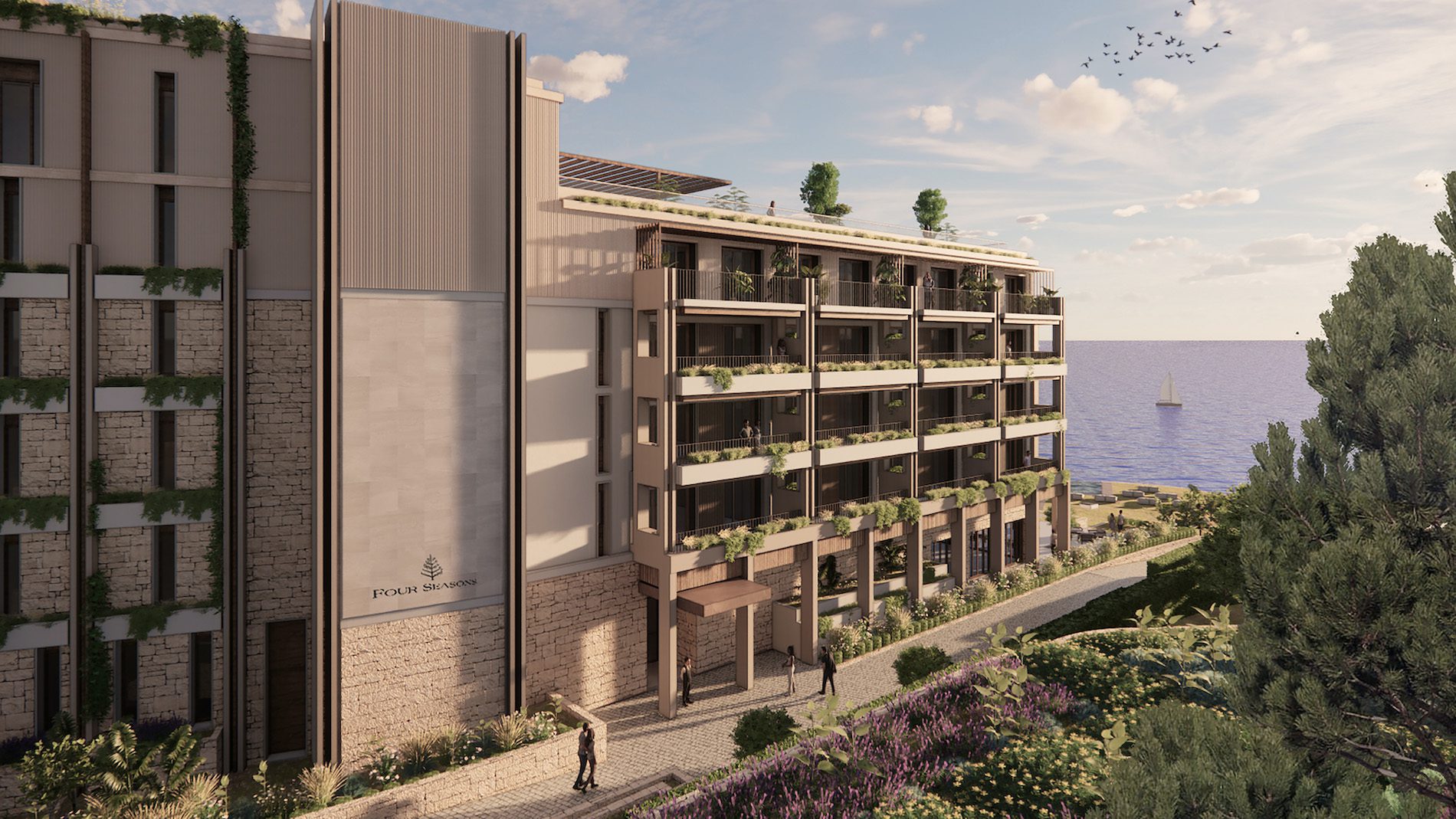
The first is the site itself. Hinitsa Bay on the Peloponnese is not Mykonos. It is quieter, more private, and significantly harder to replicate. A 75-hectare beachfront estate with 3.25 kilometres of coast is not a product that gets assembled again on this peninsula. Low-density Greek coastal zoning, combined with the sheer scale of land involved, means the scarcity argument is structurally sound. You are not buying a unit in a building. You are buying a villa on what is effectively a private bay, managed by one of hospitality's most recognised operators.
The second is the brand's track record in capital retention. Four Seasons branded residences globally have demonstrated consistent ability to hold and appreciate value through market cycles, because the buyer pool is international, financially resilient, and relatively price-inelastic. In Greece specifically, where freehold ownership is available to foreign buyers without the leasehold complications that apply in Thailand or the Maldives, the structural ownership case is clean.
What to Watch
Three specific risks.
Construction delivery. June 2027 handover is twelve months away. The project is under construction, not complete. Mediterranean resort developments have a mixed track record on schedule. Buyers should verify construction progress directly and understand the contractual remedies for delay.
Pricing opacity. Buying without a published price requires a sophisticated negotiation. There is no public comparable to anchor expectations. Buyers unfamiliar with this segment can overpay without knowing it. Independent legal and valuation advice is not optional here.
Rental income uncertainty. If this is being evaluated partly as a rental asset, the Four Seasons management agreement will govern net returns. Programme terms, including management fees, mandatory participation windows, and owner-use restrictions, vary by property and must be reviewed carefully before signing. Do not assume the brand name translates directly into a specific income figure.
Bottom Line
This is for a buyer who wants irreplaceable coastal Greece, Four Seasons service standards, and a clean freehold title, and who does not need the investment to carry itself on rental income. The capital appreciation case is credible. The income case is unproven from the available data and should not be the primary reason to buy. Pass if you need a stated yield, a published price, or a near-term exit. Proceed if you are allocating to lifestyle-anchored real estate with a long hold horizon and the financial position to treat rental income as a bonus rather than a requirement.
Data sourced from OffPlan. ROI projections are developer-estimated and not guaranteed. This is not financial advice.