Global Luxury Property Flows: Where Ultra-High Net Worth Investors Are Moving
Markets offering freehold, legal clarity, lifestyle, and residency.
Executive Summary
Ultra-high net worth capital is not rotating into luxury real estate because returns are compelling. It is rotating because political risk, currency fragility, and passport optionality have become existential concerns for wealthy families across multiple continents. The markets benefiting most are those offering legal clarity, lifestyle credibility, and a second identity. That combination is rarer than it sounds.
The Dynamic
Something structural has shifted in how the wealthiest investors think about property. For most of the past three decades, a trophy apartment in a global financial centre was the default store of value. That logic is fraying. The asset class has not collapsed, but its purpose has changed. Luxury property is no longer primarily a financial instrument. It has become infrastructure, a physical node in a multi-jurisdiction life strategy that prioritises optionality over income.
The buyers moving most aggressively right now are not opportunists hunting distressed valuations. They are families engineering resilience, and they are buying in places they can actually live, bank, and hold a second passport.
What Is Driving This
The obvious explanation is yield compression in traditional financial markets, pushing capital into hard assets. That is true but shallow. The deeper cause is a convergence of pressures that has no clean historical precedent.
Wealthy families in emerging economies have watched currency devaluations accelerate, watched tax regimes tighten without notice, and watched political transitions move faster than legal frameworks can absorb. For them, a property purchase in a stable jurisdiction is not a bet on appreciation. It is a hedge against the place they already live.
Simultaneously, European and Gulf-based wealth is recalibrating. Families that once considered diversification optional now treat it as fiduciary duty. The residency-by-investment programmes that governments in Southern Europe and the Gulf have maintained, some for over a decade, are now being stress-tested by serious capital rather than lifestyle buyers. The distinction matters. Lifestyle buyers are price-sensitive and discretionary. Serious capital is neither.
A third force is generational. The inheritors of large family wealth are younger, more internationally mobile, and far less attached to a single home country than their parents were. They do not buy a property in Greece or the UAE because it is foreign. They buy it because it is one of several places they genuinely intend to use. This changes holding periods, changes the rental calculus, and changes what developers need to build.
What It Means for Investors
The beneficiary markets share a specific profile. They offer freehold or long-term tenure clarity for foreign buyers, credible legal systems, lifestyle infrastructure that justifies physical presence, and some form of residency pathway. The UAE, Portugal, Greece, and Thailand each qualify on at least three of those four criteria, which is why they appear repeatedly in conversations about where this capital is landing.
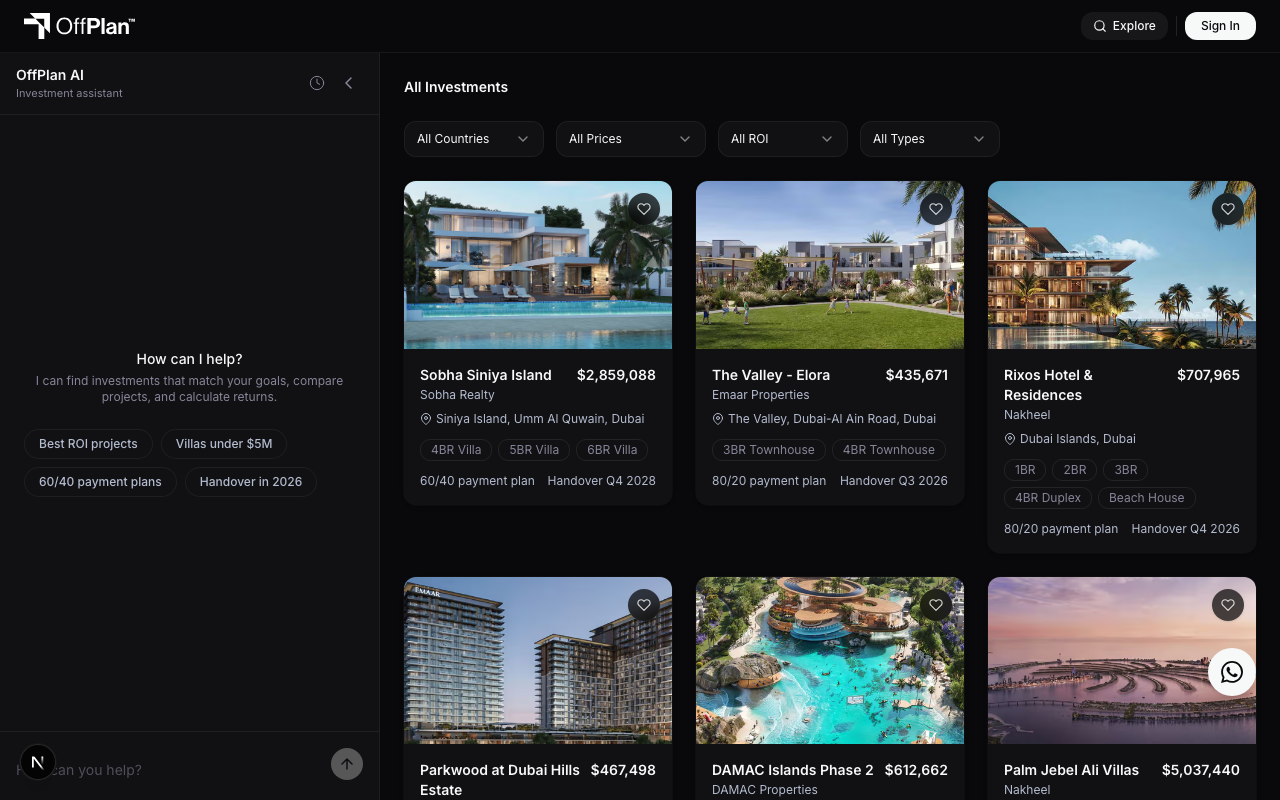
Branded residences are absorbing a disproportionate share of the flow. The mechanism is straightforward: a globally recognised hospitality brand reduces the due diligence burden for a buyer who cannot spend six months learning a local market. It also supports rental income during periods of non-occupation, which matters to buyers who will spend weeks rather than months in any single location.
| Factor | Why It Matters to UHNW Buyers |
|---|---|
| Tenure clarity | Protects intergenerational transfer |
| Residency pathway | Provides optionality without commitment |
| Brand affiliation | Reduces friction and supports liquidity |
| Legal system stability | Non-negotiable for significant capital |
| Lifestyle infrastructure | Justifies physical presence and holding |
Off-plan entry points matter more than they once did. Buyers who understand staged payment structures can deploy capital across multiple jurisdictions simultaneously without concentrating liquidity risk at any single settlement date. This is sophisticated portfolio construction, not speculation.
What to Watch
The pressure point is supply. The markets attracting this capital are, almost by definition, constrained. Coastal geographies in Greece and Portugal have hard limits on developable land. The UAE is building at scale, but branded and ultra-luxury stock remains a small fraction of total supply. When serious capital concentrates into a narrow band of genuinely qualifying assets, entry timing and asset selection matter enormously.
Watch also for residency programme changes. Governments adjust thresholds and structures, sometimes with limited notice. The strategic value of a purchase can shift if the residency mechanism attached to it is restructured.
The families moving capital now are not panicking. They are planning. That distinction is why this rotation has durability.
Data sourced from OffPlan. ROI projections are developer-estimated and not guaranteed. This is not financial advice.