Palm Jebel Ali Villas by Nakheel: The Investment Case
Executive Summary
Palm Jebel Ali Villas is a genuine scarcity play in the ultra-high-net-worth segment, with sovereign backing, irreplaceable waterfront positioning, and no comparable supply in the pipeline. The 6% estimated yield is modest for Dubai, and the Q4 2028 handover means you are carrying capital for two and a half years before income starts. This is a hold-for-appreciation case first, a yield case second, and it is only right for investors who understand both of those things clearly.
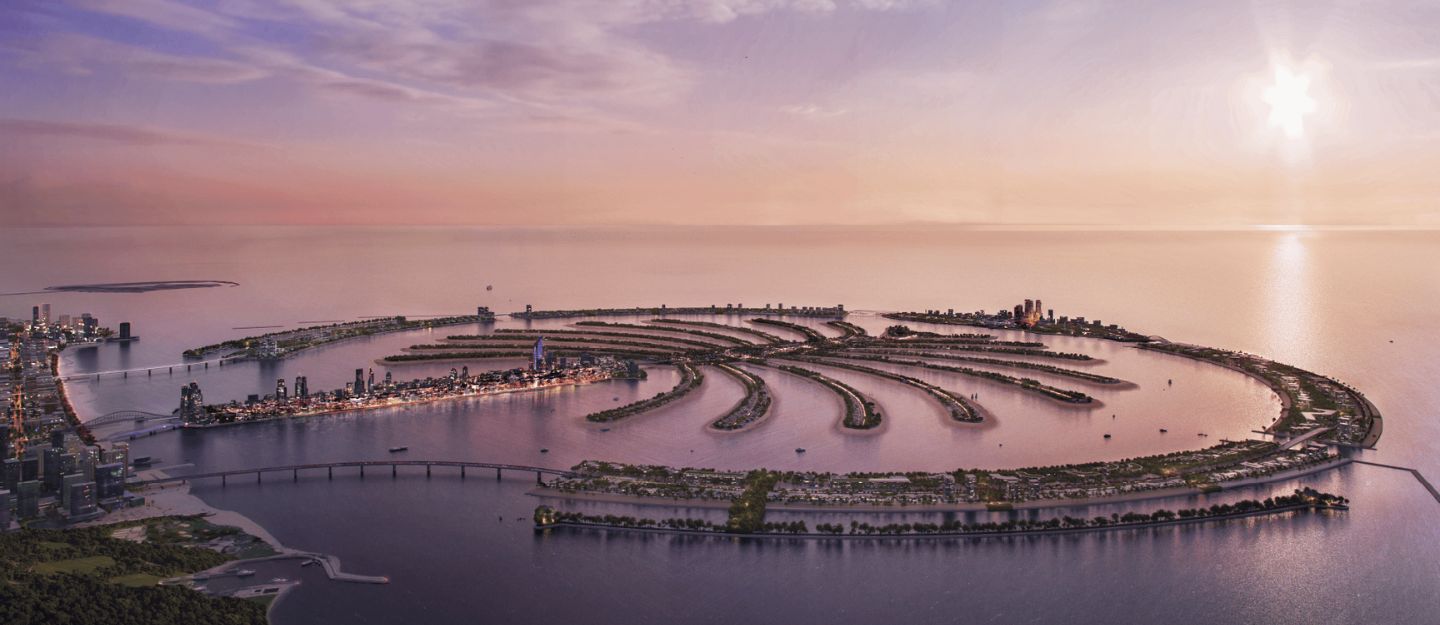
The sharpest thing you can say about Palm Jebel Ali is also the most uncomfortable one: the last time Nakheel built a palm, early investors waited twenty years and some never recovered. That history is priced into every conversation about this project. The question is whether the 2023 relaunch, backed by Dubai Holding rather than a pre-crisis developer operating alone, has changed the fundamental risk structure. The answer is nuanced, but it leans yes, with conditions.
The Numbers
Entry starts at $5,037,440, which for a 5-bedroom villa across 679 to 1,131 sqm implies a price per square metre ranging roughly from $4,450 to $7,400 depending on unit and collection. That is a wide band, and the most important thing to understand is that you are paying for land position, not just construction.
The 80/20 payment plan deserves close reading. Twenty percent is due on booking, approximately $1,007,488 out the door immediately. The structure implies 60% staged through construction milestones, with the final 20% at handover in Q4 2028. On a $5M villa, that is another $1M due at the end of a roughly two-and-a-half-year construction window. Cash-flow this carefully: you are deploying most of the capital before the asset generates a single dirham.
At a 6% gross yield on a $5M purchase, annual rental income would be approximately $302,000 in a fully let scenario. That assumes the masterplan infrastructure, including the planned 5-star hotels, marina village, and yacht club, is sufficiently operational by handover to support premium rents. In 2028, some of that infrastructure will still be under development. The first year or two of yield may undershoot the stated 6% while the island matures.
What Makes It Interesting
Two things distinguish this project, and both are structural rather than cosmetic.
First: sovereign construction backing. Dubai Holding's involvement is not a marketing point. It is the material difference between this relaunch and the original Palm Jebel Ali project. The organisational and financial capacity behind this development is categorically different from a private developer raising debt against pre-sales. Completion risk is genuinely low.
Second: private beach access per villa, not per community. In a segment where shared beach infrastructure is standard even at high price points, each villa in the Beach Collection receives its own dedicated beach frontage. That is a genuine amenity differentiator and, more importantly, a rental differentiator. Ultra-high-net-worth short-term tenants pay specifically to avoid sharing.
What to Watch
Liquidity is the honest risk. This is a thin market. There are not hundreds of comparable transactions per quarter to anchor a resale price, and in a downturn the buyer pool for a $5M-plus waterfront villa on a developing island contracts sharply. If you need to exit before the masterplan reaches critical mass, you may find the market illiquid at the price you want.
Masterplan delivery timing also matters. The 5-star hotels, marina, and retail boulevard are planned but not guaranteed to open on any fixed schedule. The rental case at handover in Q4 2028 depends partly on how much of that supporting infrastructure is operational. If the yacht club and beach clubs are two years behind the villas, early rental performance will reflect that.
The residency-by-investment route available to buyers at this price point is a useful secondary benefit, not an investment thesis. Do not weight it too heavily.
Bottom Line
Palm Jebel Ali is for the investor who thinks in six-to-ten-year cycles, has liquidity elsewhere, and wants a physically irreplaceable asset in a market where there is genuinely nothing comparable coming. The 6% yield is a floor, not the point. The point is that there is no second Palm Jebel Ali.
Pass if you need yield from year one, if this represents a significant portion of your net worth, or if a two-and-a-half-year construction window followed by a maturing masterplan creates cash-flow pressure. The project is real and the developer is credible. The timeline and the illiquidity are also real, and they require an equally clear-eyed commitment.
Data sourced from OffPlan. ROI projections are developer-estimated and not guaranteed. This is not financial advice.