Rixos Hotel & Residences, Dubai Islands: The Investment Case
Executive Summary
At $707,965 entry with a stated 7% ROI and Q4 2026 handover, this is one of the nearest-term branded residence plays currently available on Dubai Islands. The Rixos operational model removes the management burden that kills short-stay yields, but the service charge is high and Dubai Islands is still finding its feet. This deal suits income-focused investors who want hotel infrastructure without hotel ownership complexity. It is not for those who need liquidity in the near term or who are uncomfortable with an area still building toward critical mass.
The Numbers
Start with what the payment plan actually requires. An 80/20 structure with handover at Q4 2026 means 80% is due before or at completion, with the final 20%, roughly $141,600 on the entry price, due at keys. That is not a lenient plan. Most of your capital is committed well before the asset generates income, which means the cost of capital during construction is real and should be priced into your return expectations.
The 7% ROI on a $707,965 entry implies gross annual rental income of approximately $49,500. That is the headline. Now stress-test it. The service charge runs approximately AED 40 per square foot annually. On a 120 sqm (roughly 1,291 sqft) entry-level unit, that is around AED 51,600, or approximately $14,000 per year, purely in service charges. Net yield before financing, vacancy, and management fees compresses meaningfully. The rental premium a Rixos-branded, fully serviced unit commands over a standard apartment needs to be real and consistent to absorb that cost. For investors targeting short-stay rentals, the brand and beach infrastructure support the premium thesis. For long-term tenants, the calculus is tighter.
The price-per-square-metre on entry works out to approximately $5,900, reasonable for a branded, beach-access product on a Dubai waterfront, though Dubai Islands does not yet command the same floor as Palm Jumeirah or Bluewaters.
What Makes It Interesting
Two things, and only two, genuinely differentiate this deal.
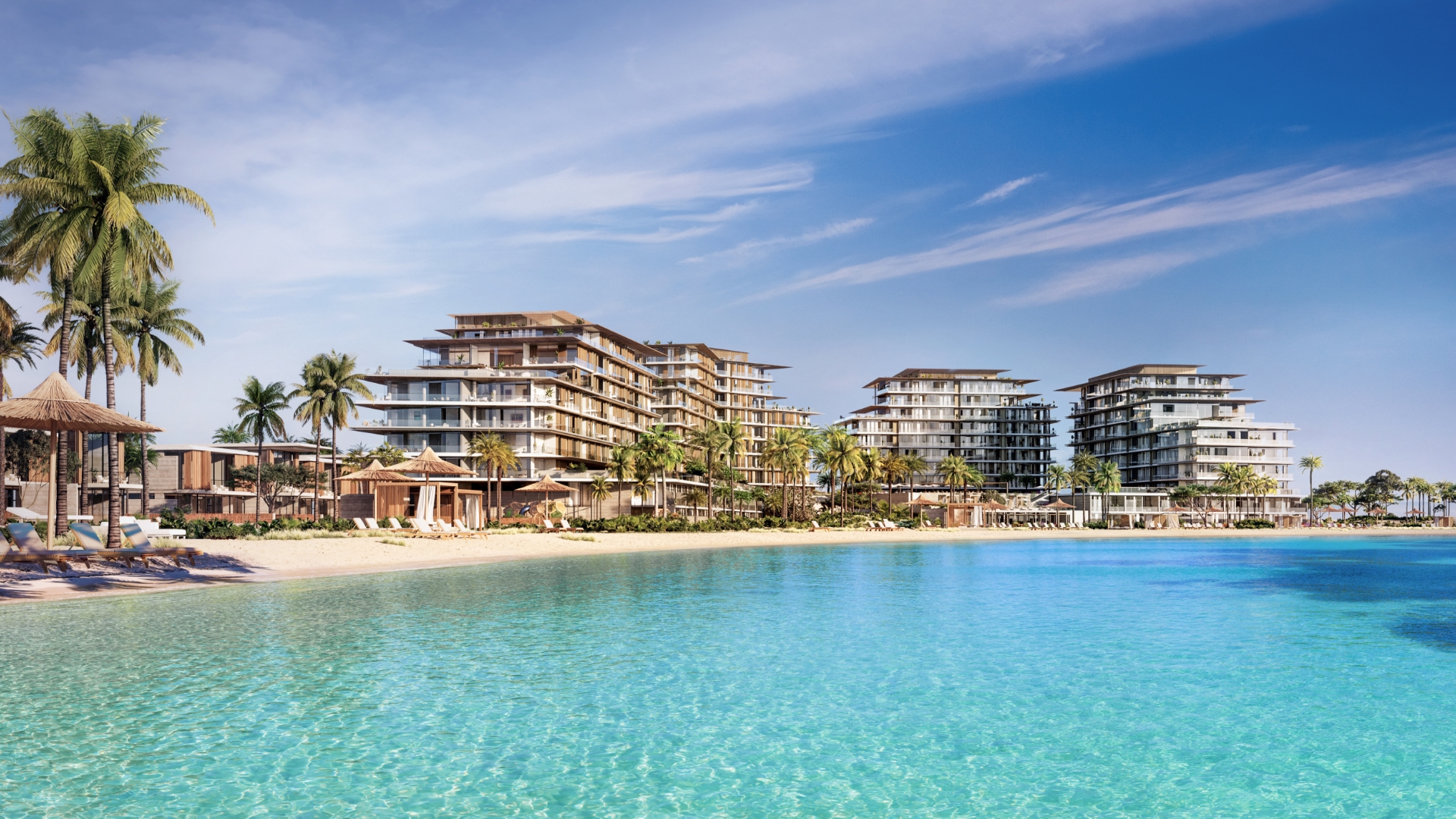
First, the Rixos management stack is already operational infrastructure, not a promise. Concierge, valet, daily housekeeping, a 700-metre private beach: these are the features that justify short-stay premiums and, critically, they require nothing from the investor to run. Most short-term rental plays in Dubai demand active management or a third-party operator relationship. Here, the hotel runs it. That operational simplicity is worth paying for if the yield holds.
Second, the handover timeline. Q4 2026 is six months away. On Dubai Islands, where several projects have longer construction horizons, this proximity to income is a genuine differentiator. Construction risk is materially reduced. An investor entering today is not waiting years for yield; they are waiting months.
What to Watch
Dubai Islands is not Palm Jumeirah. The cruise terminal is operational and infrastructure has improved, but the area has not yet reached the rental-market depth of more established Dubai waterfront nodes. Occupancy in the short-stay segment depends on destination awareness, and that is still building. If occupancy lags in the first one or two years post-handover, the service-charge drag compounds quickly.
The service charge deserves a second mention because it is structural, not temporary. AED 40 per square foot is the cost of the hotel-grade model. It does not decline in a slow rental year. Investors should model conservatively on net yield and validate the gross rental assumption against comparable branded product before committing.
Finally, the 80/20 plan is capital-heavy on the front end. Investors who are stretching to fund 80% before handover have limited flexibility if delivery slips or if the rental market is slower than projected in the opening months.
Bottom Line
This is a deal for an investor who wants branded operational infrastructure, near-term income, and beach access, and who can absorb a high service charge against a genuine rental premium. The math works if occupancy is strong. It does not work as a margin-of-safety investment.
Pass if you need the area to be proven, if you are sensitive to service-charge drag on net yield, or if you require a more flexible payment structure. The Rixos product is credible. Dubai Islands still carries location risk that more established addresses do not.
Data sourced from OffPlan. ROI projections are developer-estimated and not guaranteed. This is not financial advice.