The Residences at Vale do Lobo: Is $1.4M the Right Entry Point for the Algarve's Most Established Resort?
Executive Summary
The Residences at Vale do Lobo offers something genuinely rare: new-build product within an operating resort that took six decades to mature. The absence of a projected ROI is both honest and instructive. This is a capital preservation and lifestyle-led purchase in one of Europe's most defensible luxury coastal markets. It is not a yield play, and investors who need it to be one should look elsewhere.
The Numbers: What the Payment Plan Actually Implies
The project data states staged payments during construction with 30% reserved as the headline structure. At a $1.4 million entry point, that implies approximately $420,000 committed before handover in Q4 2027, with the balance due across construction milestones ending December 2027. That is an 18-month capital deployment window from today, not an onerous schedule for a buyer at this price point.
No yield is stated because yield in Vale do Lobo is not the primary driver of demand. The resort operates on high-season short-term rental premiums, but occupancy is seasonal and gross income must absorb service charges, resort fees, and management costs that come with a full-amenity estate. Any net figure would require significant assumptions. That the developer has not supplied one is, actually, the responsible position.
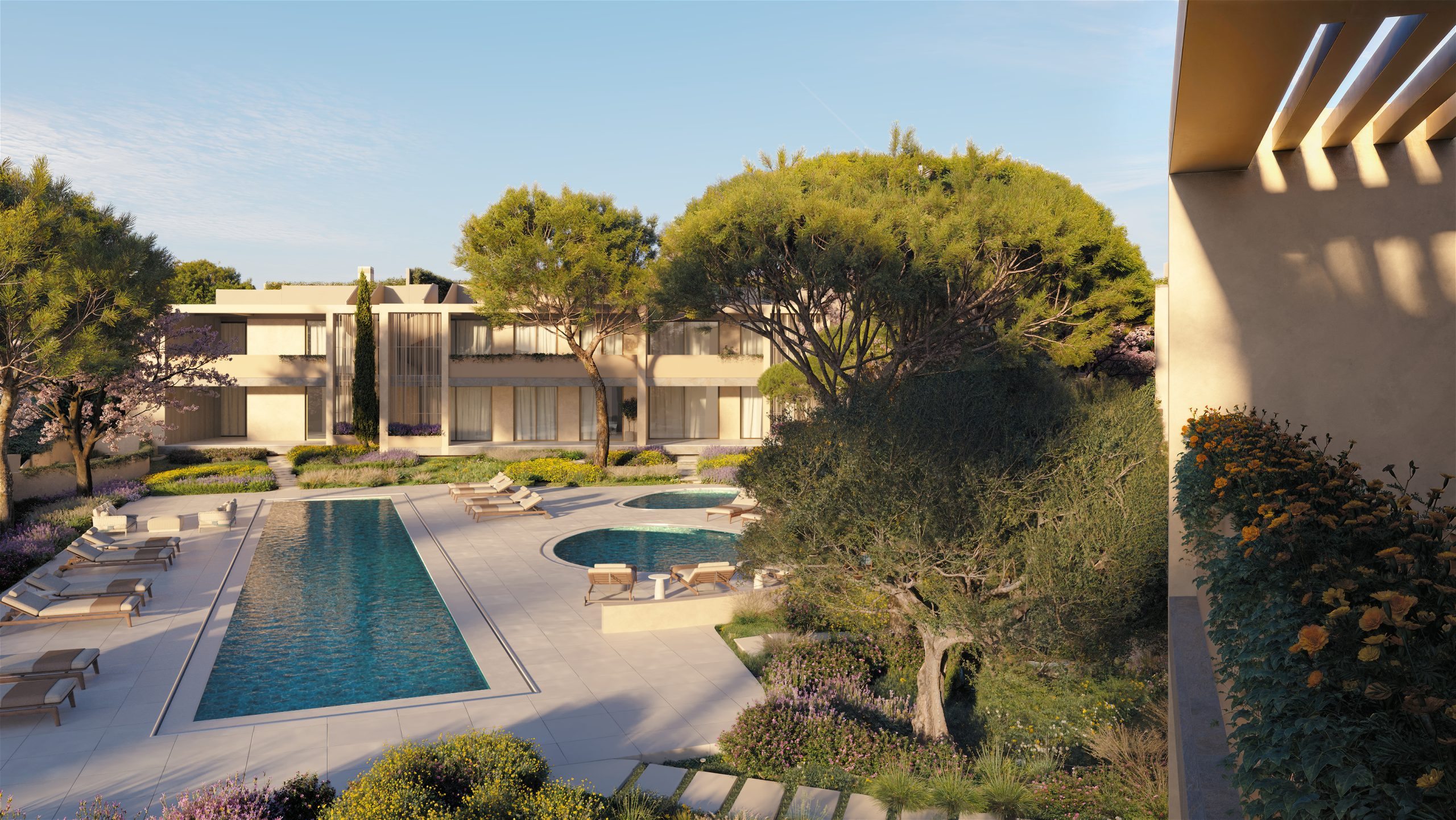
What the $1.4 million entry does buy: a private pool, access to 450 hectares of operational resort infrastructure, Royal Golf Course adjacency, and beach access within a 44-unit boutique development. On a per-unit basis, 44 homes is a deliberately small release. That is not accidental. It maintains scarcity within an already supply-constrained resort.
What Makes It Interesting
Two things stand out, and they are connected.
First, the resort itself is the moat. Vale do Lobo has been operating since the 1960s. The beach club, golf courses, restaurants, and concierge infrastructure are not promised amenities dependent on phase two. They exist. Buying into an off-plan development with access to a functioning 450-hectare resort is a materially different risk profile than buying into a masterplan where everything is under construction simultaneously.
Second, BREEAM certification by Broadway Malyan is not greenwashing at this price point. European buyers, particularly Northern European second-home buyers who dominate this market, increasingly require sustainability credentials for primary and secondary purchases. BREEAM-certified new-build stock within an established Algarve resort remains scarce. That distinction will matter at resale.
The 40% Phase 1 reservation rate, with construction active since mid-2025, confirms genuine buyer demand rather than developer optimism.
What to Watch
Portugal's Golden Triangle operates under freehold ownership for foreign buyers, which removes one structural risk. Construction risk is the primary concern. Handover is Q4 2027, roughly 18 months out. Kronos Homes is a credible developer with a European track record, but any off-plan purchase carries the risk of delays. The boutique scale, 44 units, means any contractor disruption has limited buffer.
The seasonal demand profile is the second watch point. The Algarve high season is concentrated. Owners seeking rental income need to price this honestly: strong summer returns, thin shoulder months, and a winter market that depends on golf tourism rather than beach demand. Net yields, after all costs, will be modest relative to headline gross figures. Anyone projecting aggressive returns needs to stress-test that assumption against a realistic occupancy model, not a peak-week rate applied to 52 weeks.
Finally, the Algarve's property market is sensitive to Northern European economic sentiment. A sustained downturn in the UK or German economies, the primary buyer cohorts here, can affect both liquidity and achievable rents.
Bottom Line
This is a purchase for one of two buyers. The first is a high-net-worth individual who wants a Algarve second home with operational resort infrastructure and is prepared to accept modest net rental income as the cost of owning in a place with genuine long-term capital resilience. The second is a European wealth-preservation buyer who understands that owning scarce, BREEAM-certified new-build within an irreproducible 60-year-old resort is a different asset class from speculative off-plan.
If you need a stated yield to justify the entry price, pass. If you understand what $1.4 million buys inside Vale do Lobo, and what it would cost to replicate that access, the case is straightforward.
Data sourced from OffPlan. ROI projections are developer-estimated and not guaranteed. This is not financial advice.